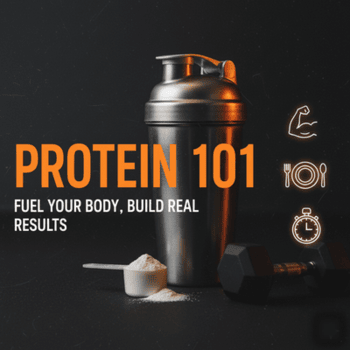
Protein 101: How Much You Really Need For Your Gains
Stop Guessing and Start Growing
In the world of fitness, everyone seems to have an opinion on protein. Is it one gram per pound of body weight? Should you drink a shake immediately after your workout? Is too much bad for your kidneys?
The truth about protein—the cornerstone of muscle, recovery, and satiety—is less about rigid dogma and more about precision. Just like we cut through the confusion about quick fixes, we’re going to establish the scientific, disciplined approach to protein intake that actually gets you the FITLIFE Advantage™.
🍗 Why Protein is Your Master Macro
Protein is not just for bodybuilders. It is an essential macronutrient that acts as the building block for virtually every structure in your body.
Muscle Growth and Repair: Protein provides the amino acids necessary to repair the muscle fibers you intentionally break down during a disciplined workout. Without enough protein, you cannot effectively recover or build new muscle tissue.
Satiety and Fat Loss: Protein is the most satiating of the three macros (protein, fat, and carbs). A high-protein diet helps you feel fuller for longer, drastically reducing cravings and making calorie control—a non-negotiable for fat loss—much easier.
Metabolic Boost: Your body expends more energy (calories) to digest protein than it does fat or carbs. This effect is known as the Thermic Effect of Food (TEF), and it gives your metabolism a small but measurable boost.
📈 How Much Protein You Really Need
The old standard for protein often falls short for anyone committed to serious training, recovery, and longevity. The amount you need isn’t static; it depends entirely on your specific goals.
1. The Maintenance/Minimal Activity Baseline
If you are generally sedentary or are simply trying to maintain your current health status, the basic recommended daily allowance (RDA) is the minimum required to prevent deficiency.
Target: 0.8 grams of protein per kilogram (g/kg) of body weight.
Example: A 175 lb (80 kg) person needs about 64 grams of protein per day.
2. The Optimal Performance Target (Muscle Building & Fat Loss)
For anyone training consistently (3-5 times per week) and focusing on body composition changes—either building muscle or aggressively losing fat while preserving muscle—your requirements are significantly higher.
Target: 1.6 to 2.2 grams of protein per kilogram (kg) of body weight.
Example: A 175 lb (80 kg) person needs between 128 and 176 grams of protein per day.
3. The Aggressive Calorie Deficit Target
When you are in a severe calorie deficit for rapid fat loss, your protein needs spike. This high intake is crucial because it protects your lean muscle tissue from being cannibalized by your body for energy.
Target: 2.3 to 3.1 grams of protein per kilogram (kg) of lean body mass (LBM). This is a highly personalized number best determined with professional guidance.
⏱️ The FITLIFE Advantage™: Consistency in Timing and Quality
Hitting your total daily number is the most important factor, but true optimization comes from applying discipline to how and when you consume that protein.
1. The Spacing Strategy
Your body can only effectively utilize a certain amount of protein in a single sitting for muscle protein synthesis (MPS). Instead of slamming one massive steak at dinner, prioritize even distribution.
Actionable Plan: Aim for 4 to 6 protein servings spread evenly throughout the day, each containing 25–40 grams of high-quality protein. This keeps your muscle-building switch “on” all day long.
2. Focus on Quality
Not all protein is created equal. You want complete proteins, which contain all nine essential amino acids.
Prioritize: Meat, poultry, fish, eggs, dairy (whey/casein), and soy. If you are plant-based, be diligent about combining sources (like rice and beans) to ensure you hit all nine essential amino acids.
3. The Peptide Amplification
Peptide therapy doesn’t replace protein; it makes your protein intake work better. Peptides like BPC-157 or CJC-1295 accelerate recovery and repair, ensuring that the amino acids you consume are used more efficiently and quickly to build and regenerate tissue. It is the ultimate amplification of your consistent nutritional effort.
🔎 Find Your Number: Free Tools for Personalized Protein
You don’t need expensive software or a nutritionist appointment just to get your starting number. Here are two free, simple ways to find a reliable baseline for your protein intake:
1. The Body Weight Conversion (The Easiest Method)
Use a simple online converter to determine your weight in kilograms and then plug it into the optimal range:
Search: Use Google or a converter app to find your weight in kilograms (kg).
Calculate: Multiply your weight in kg by your target number (e.g., 1.6 g/kg for muscle building).
Calculation: 80 kg x 1.6 g/kg = 128 grams
2. Free Online Macronutrient Calculators
Dozens of free online tools can generate a full macro breakdown based on your activity level, goal (e.g., “aggressive fat loss”), and current body stats.
Search: Use phrases like “free macro calculator” or “TDEE and macro calculator.”
Input Data: Enter your age, gender, height, current weight, and most importantly, your activity level. Be honest about how often you train.
Get Your Target: These calculators will provide a protein goal (along with fat and carb goals) tailored to your specified goal.
🛑 Real Talk: The Protein Myth
The fear that “too much” protein will damage healthy kidneys has been largely debunked in modern literature for healthy individuals.
If you have healthy kidneys and are training hard, focus on hitting your optimal target (1.6 to 2.2 g/kg). The risk is not having too much; the risk is consistently consuming too little and sabotaging your recovery, muscle growth, and metabolic health.
Stop settling for the minimum. Calculate your optimal protein target and commit to hitting it every single day. This is the simple, powerful act of discipline that will translate your hard work into real results.
It’s time to move beyond the basics and unlock the Advantage.
What Are Peptides? A Beginner’s Guide to the Hype and the Science
Peptides 101: A Beginner's Guide to Regenerative Health and Optimization In the ever-evolving world of health and wellness, new terms pop up constantly. You hear them on podcasts, see them on social media, and read about them in articles. One of the most powerful...
The Truth About Quick Fixes: Why Real Results Take Consistency
Stop Chasing Shortcuts: Why Consistency is Your Only True Advantage We’ve all been there. You scroll through social media and see the dazzling advertisements: “Drop 20 pounds in 20 days!” or “Get Six-Pack Abs in Just Two Weeks!” The promise of a quick fix is...
